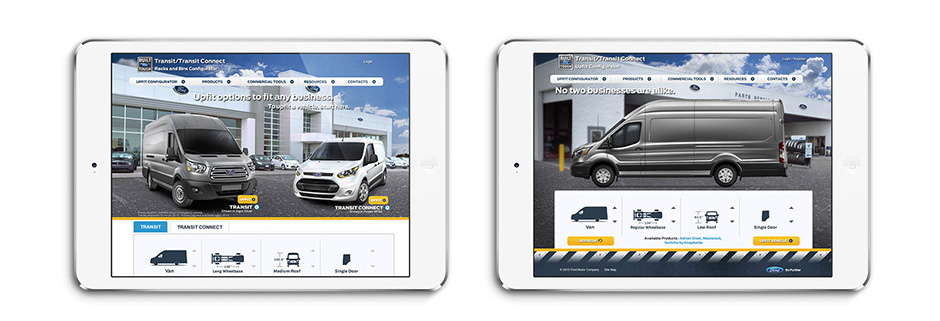
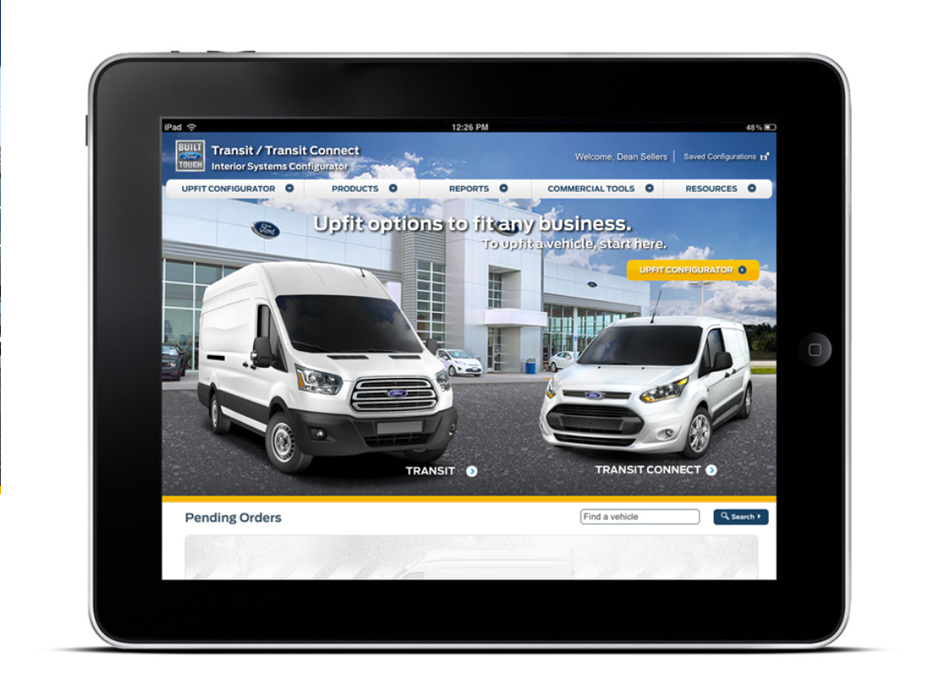
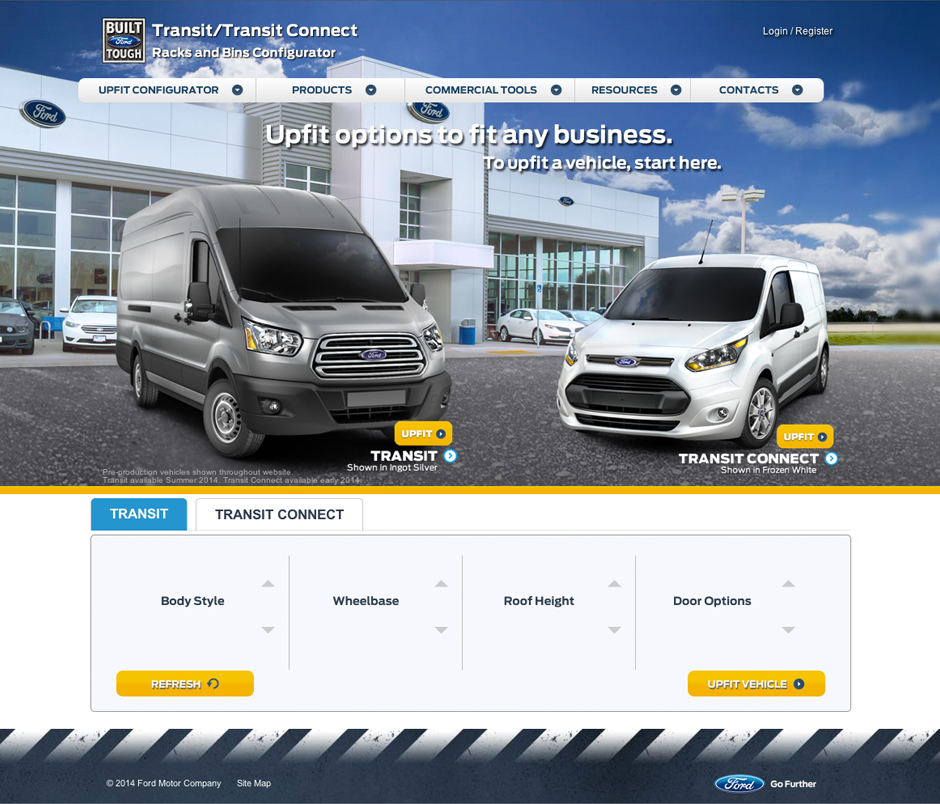
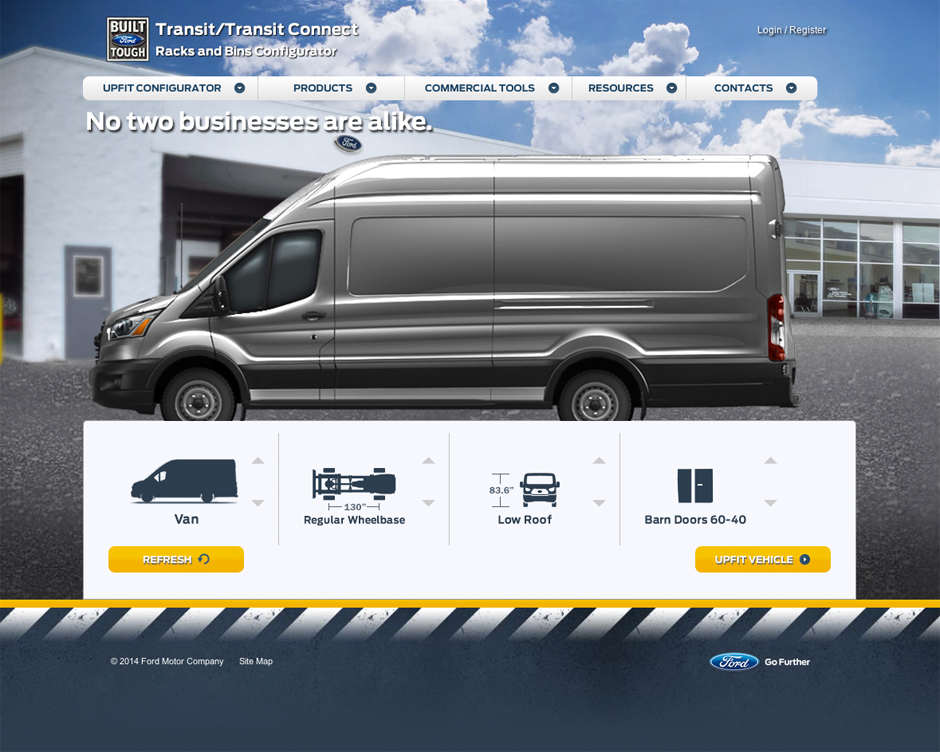
Case Study | Results : Ford Transit Upfits
Type: B2B Sales Tool Configurator, B2C eCommerce Sales Application
Role: Lead HCD/UX/UI Product Designer
Client: Ford Motor Company
Challenge:
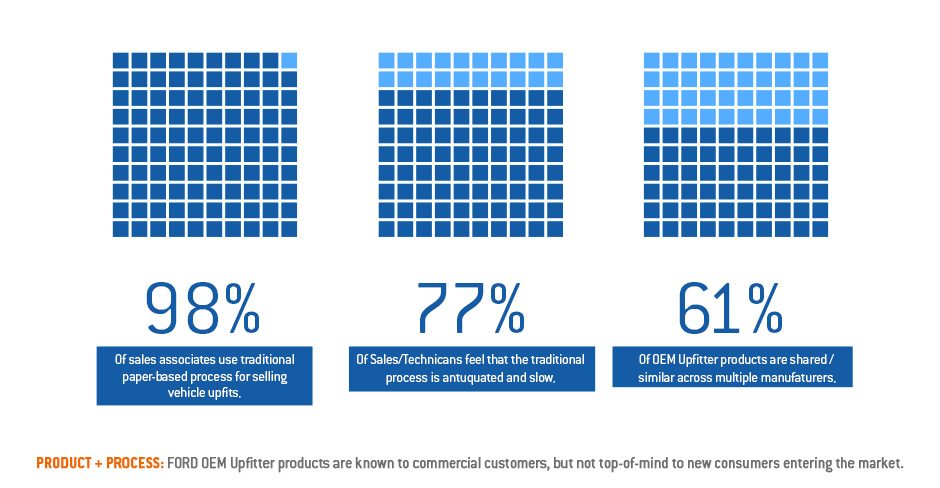
The Commercial Vehicle Industry was reaching a new turning point. Traditional Conversion Vans were falling away to Transit Vehicles. Ford Motor Company lead the way with a versatile line-up of products that fit commercial users of a various needs and business sectors.More than that, vocational markets and long-standing upfit suppliers were developing new products for this new project launch. This provided the perfect conditions to build a retail sales tool and consumer experience supporting this new launch.
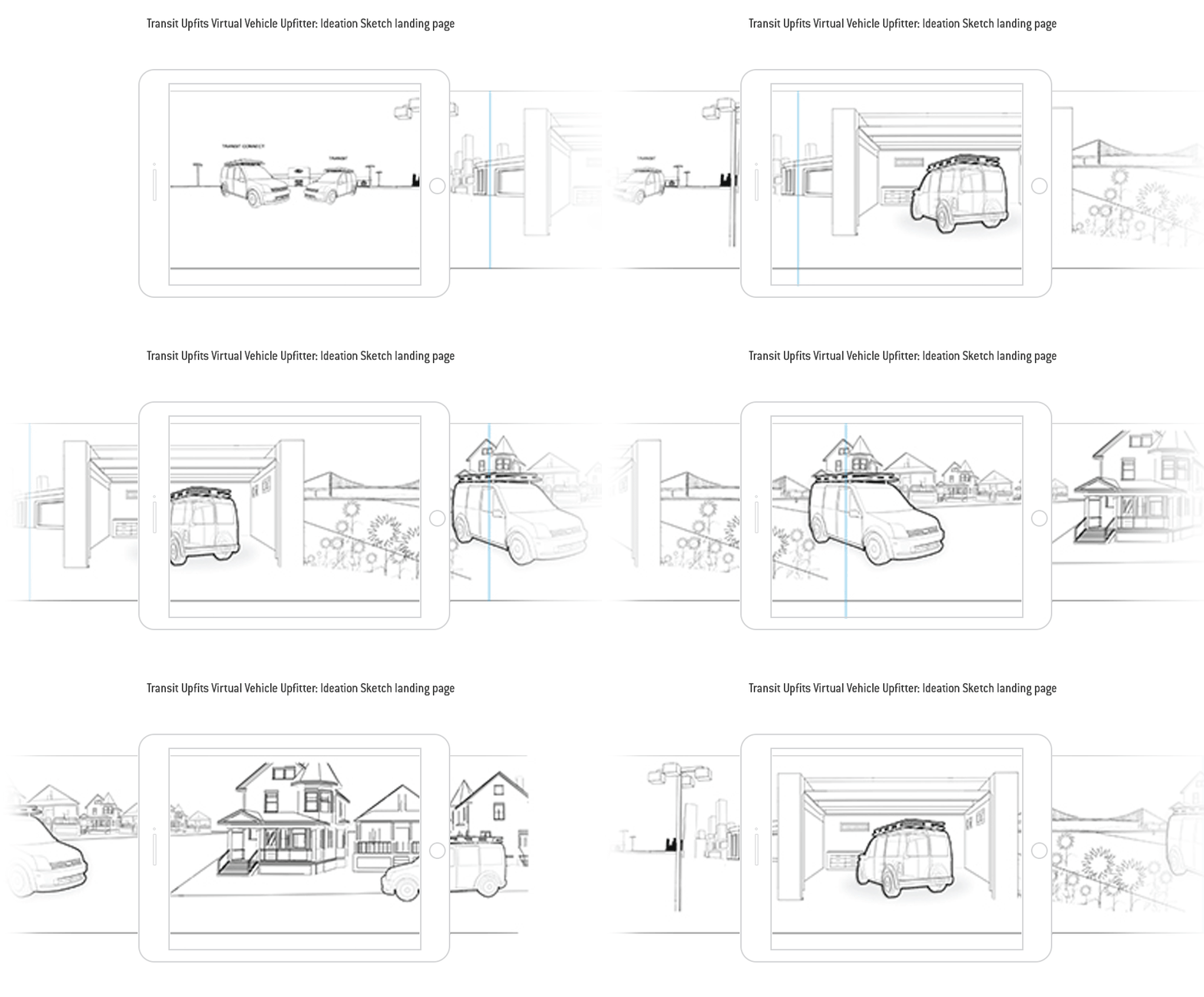
Partnerships & Collaboration:
The success of this experience hinges on an equal representation of Ford and OEM partners throughout the product design life cycle. Each partner offers similar products, so emphasis was placed on ensuring a level playing field, highlighting how their offerings integrate into the Ford Transit lineup.
Primary Users and Needs:
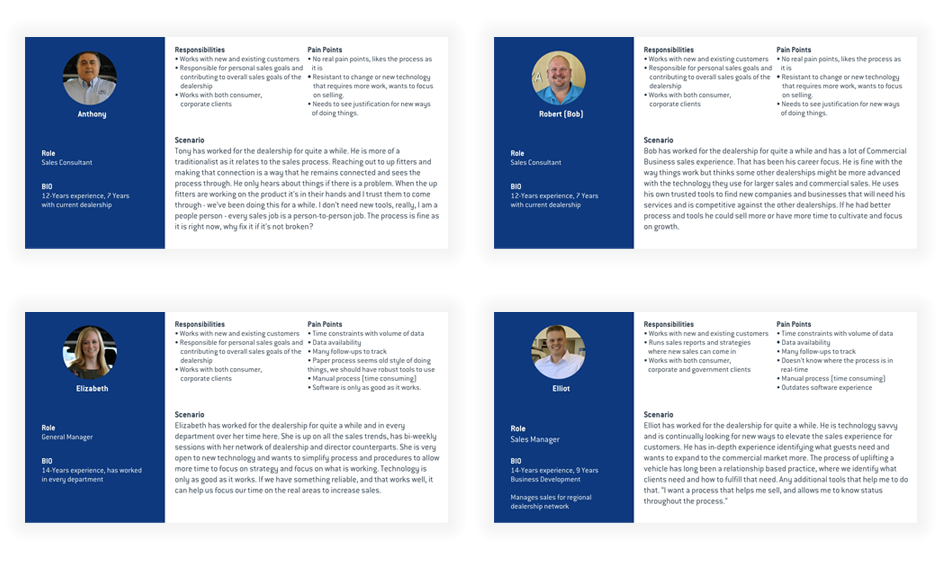
Dealer Sales / Technician Associates: Seeking a tool to upsell commercial vehicle solutions, streamline customer interactions, and enhance vocational upfit sales.
Corporate Sales Executives: Regional and global sales managers overseeing the U.S. and Canadian markets, requiring insights into product offerings, configurations, and pricing.
Human-Centered Design (HCD) Approach:
Using user-centric methodologies, I managed, advocated for, and facilitated UX/UI research and design strategies to support both project outcomes and strategic goals. These efforts resulted in:
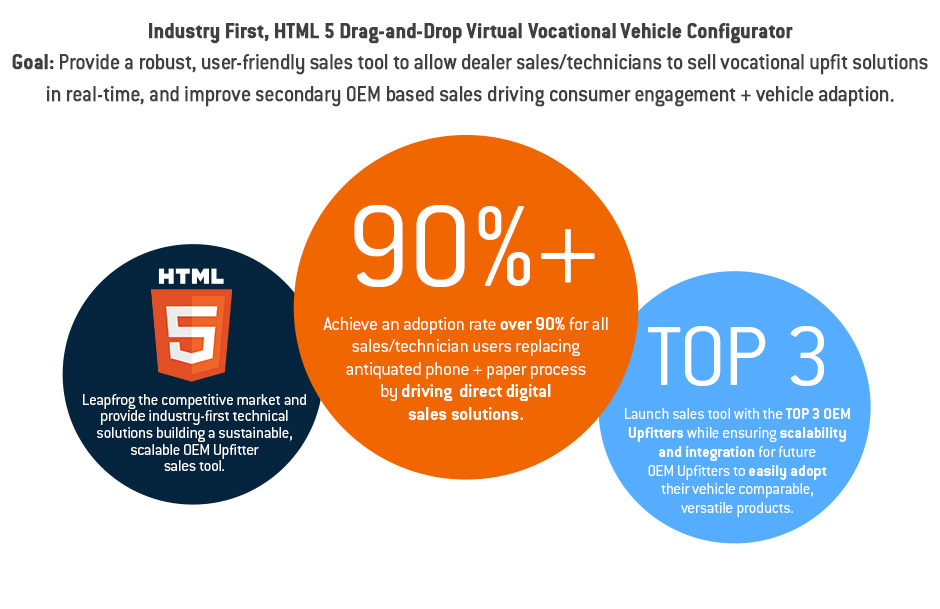
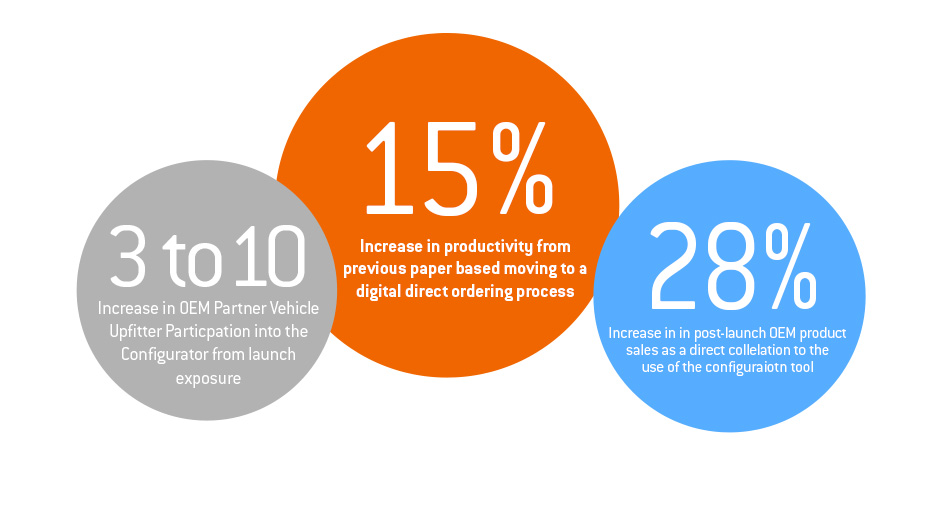
- High adoption rates Over 90%
- A highly functional Content Management System backend that allows third-party upfitters to adapt their products into a user-friendly, real-time traacking, market-focused solution
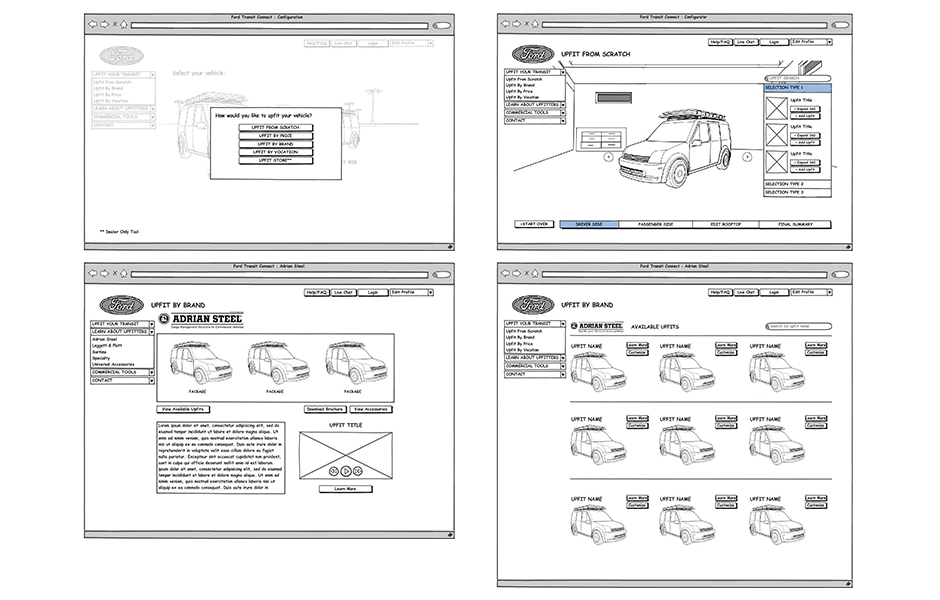
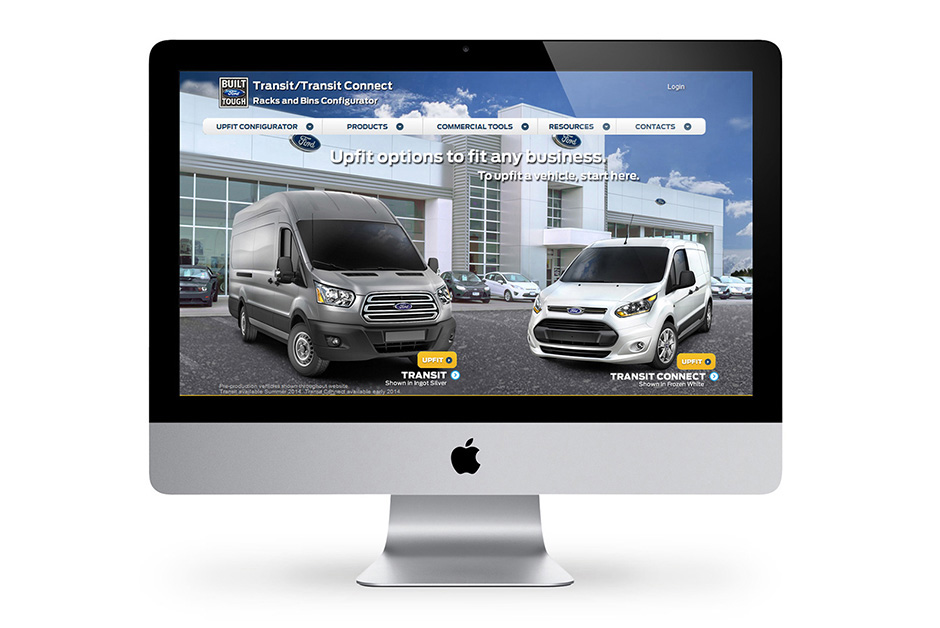
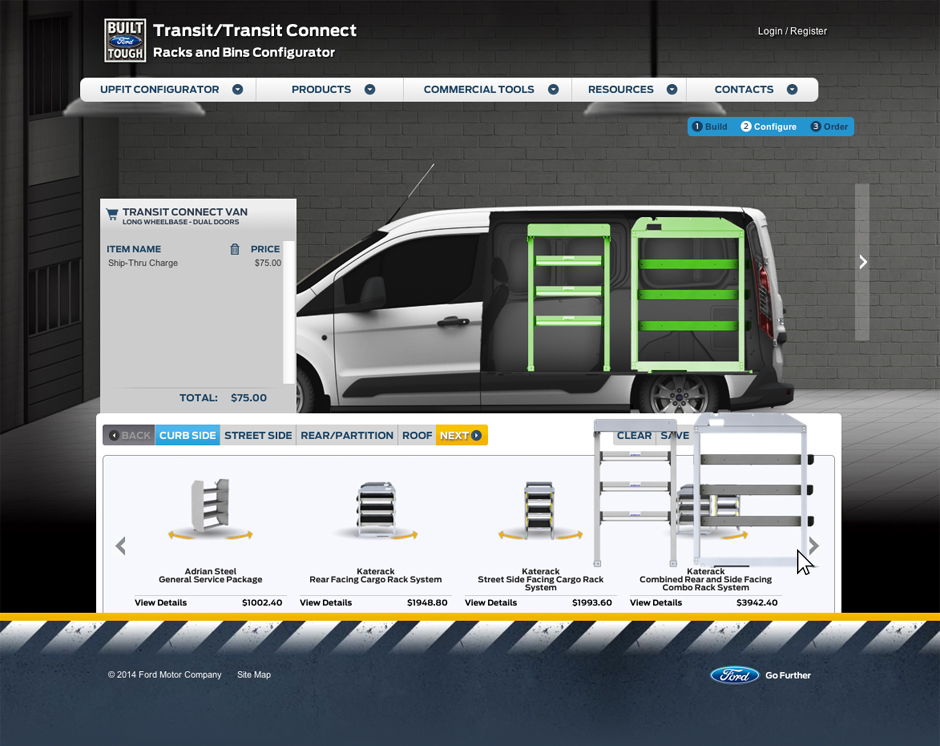
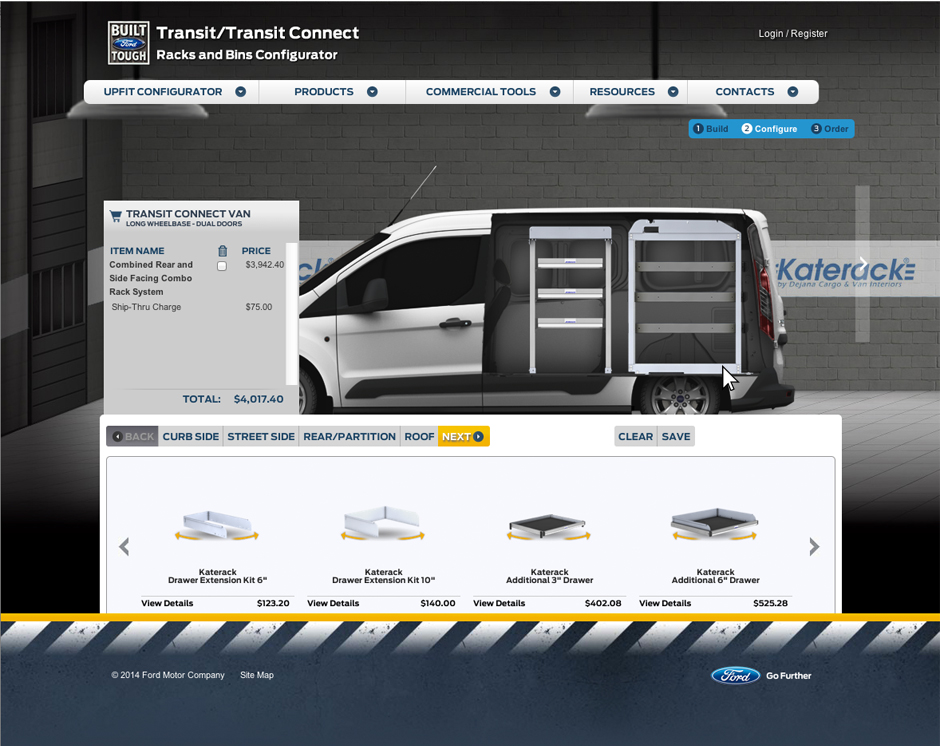
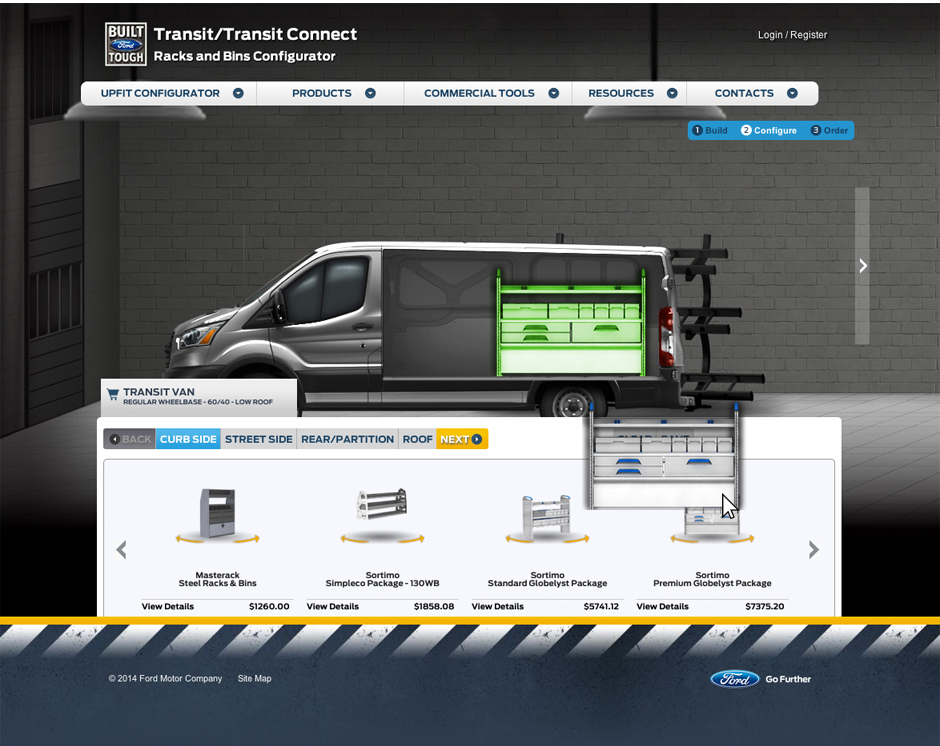
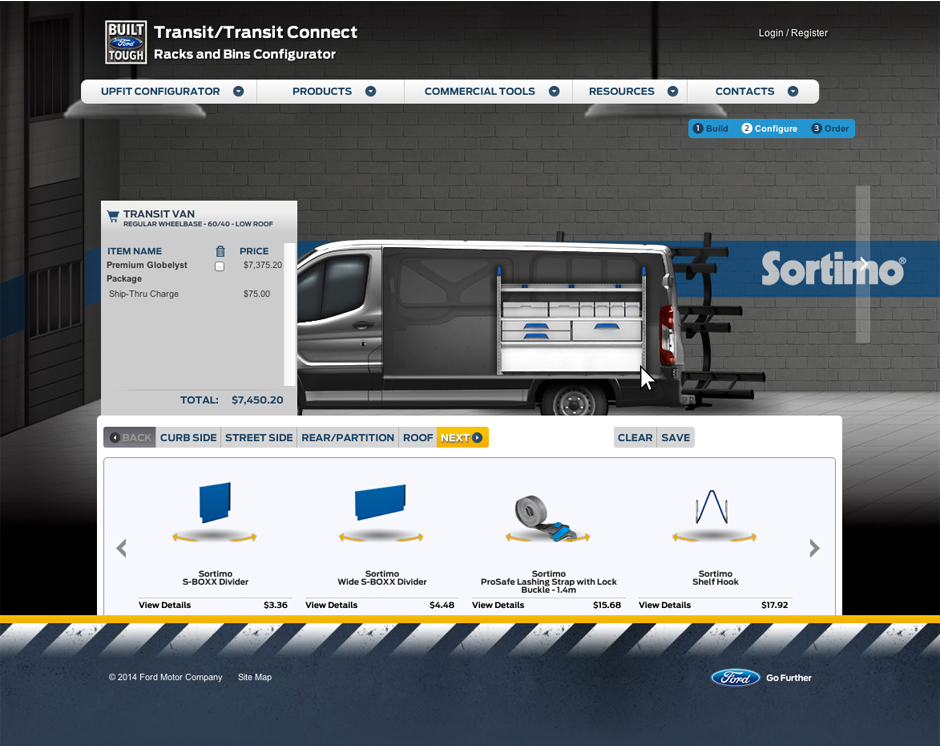
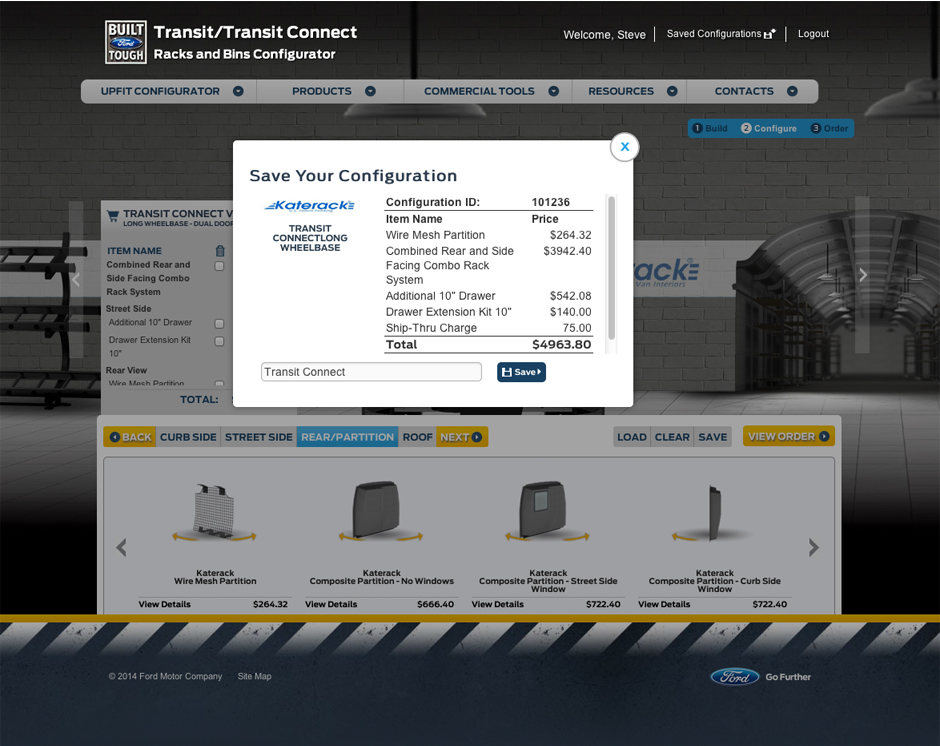
- Industry First HTML 5 Drag-and-Drop Configurator
- Award-winning usability and design
Design & Research Process:
A structured, iterative approach was used to ensure an intuitive and scalable solution:
- Competitive & User Analysis – Market research and analytics-driven insights
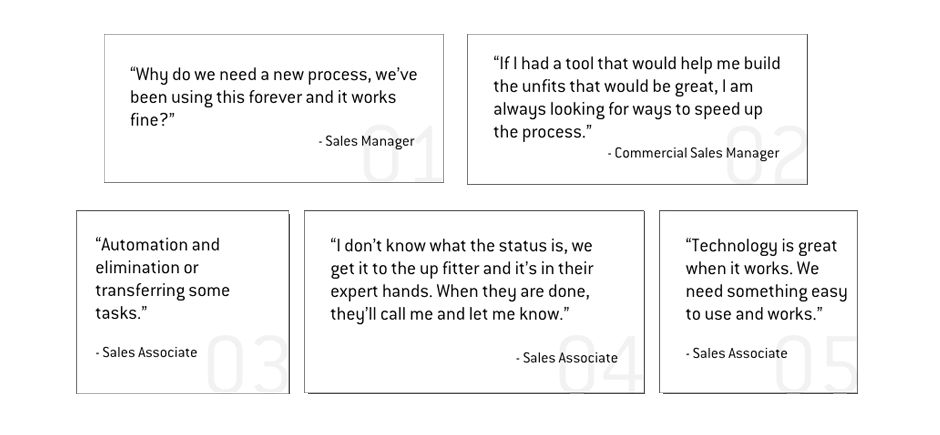
- Stakeholder & User Interviews – Engaging dealers, technicians, and corporate sales executives
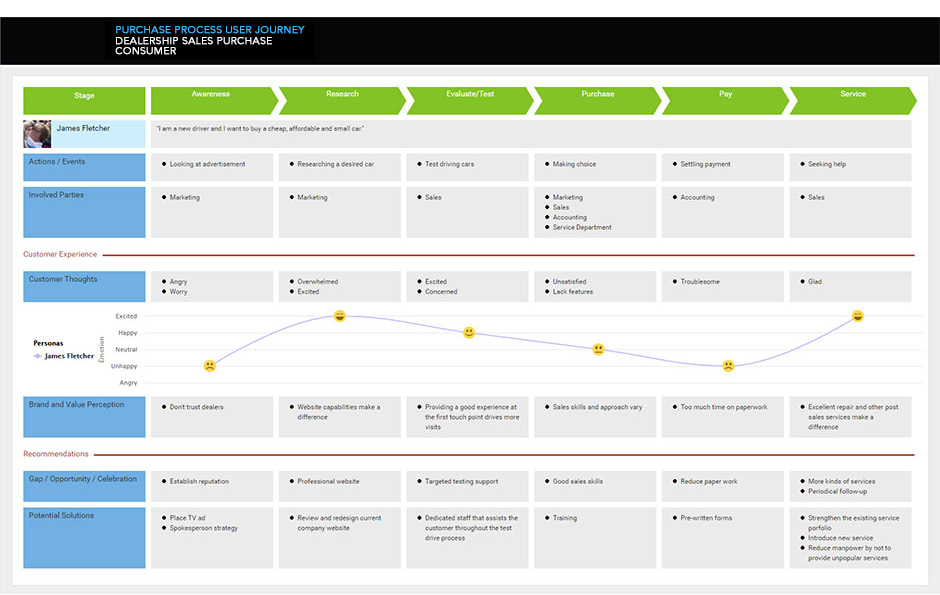
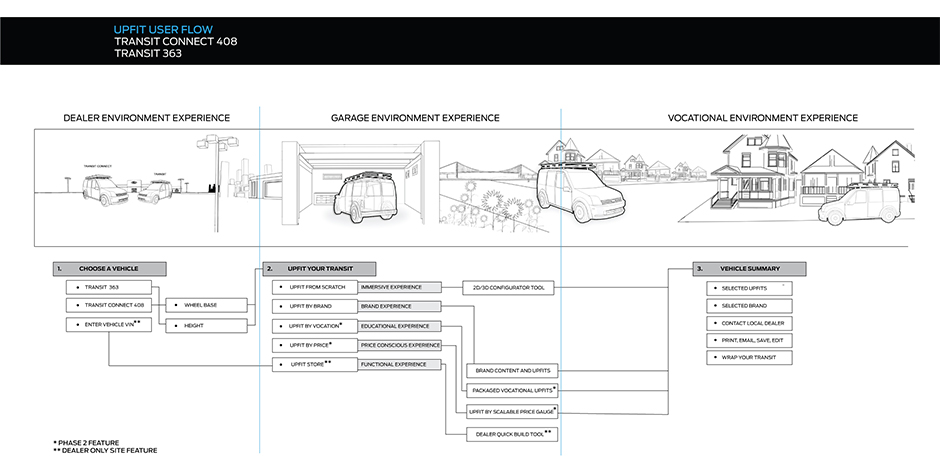
- Persona Development & Experience Mapping – Understanding user pain points and opportunities
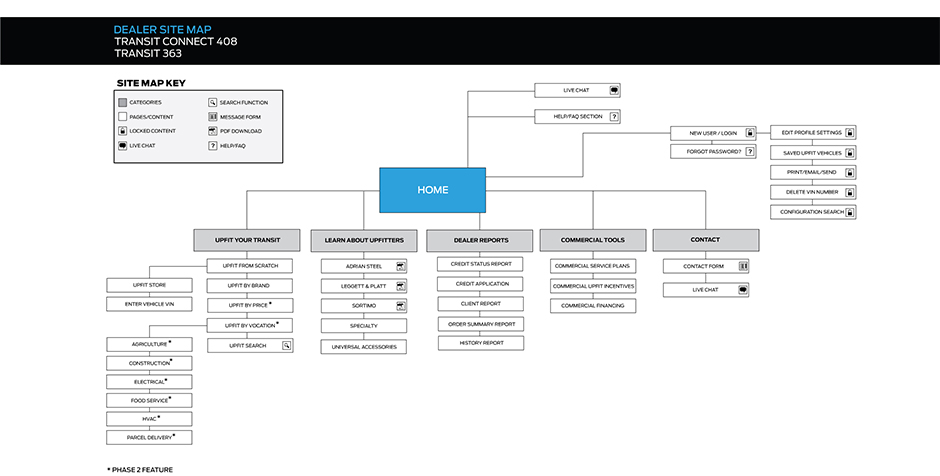
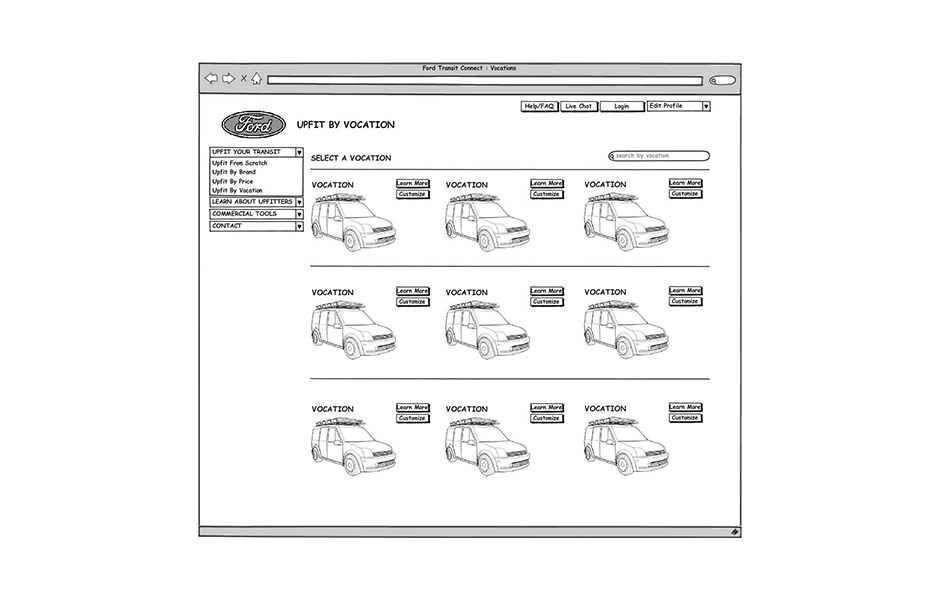
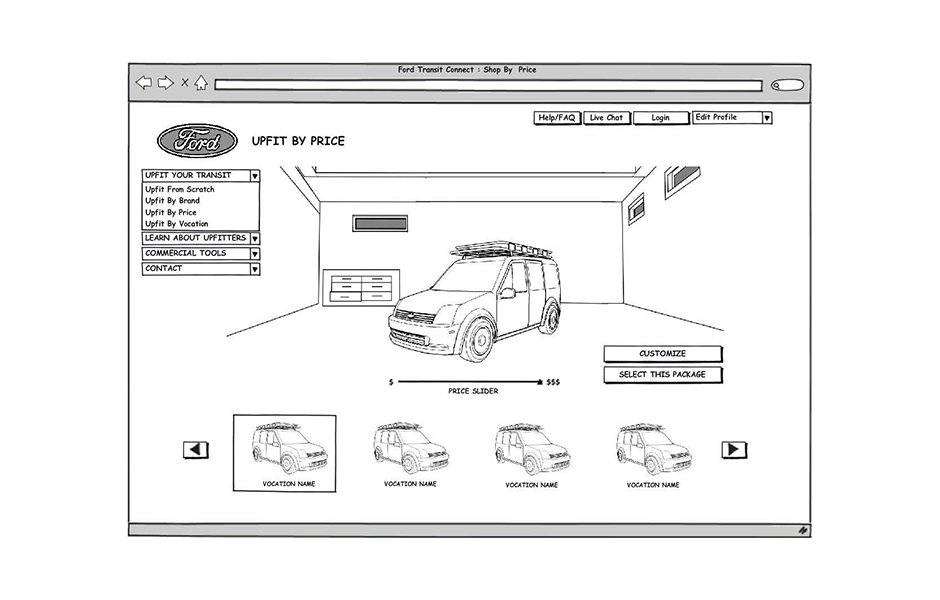
- Journey Mapping & Site Architecture – Ensuring smooth navigation and logical workflows
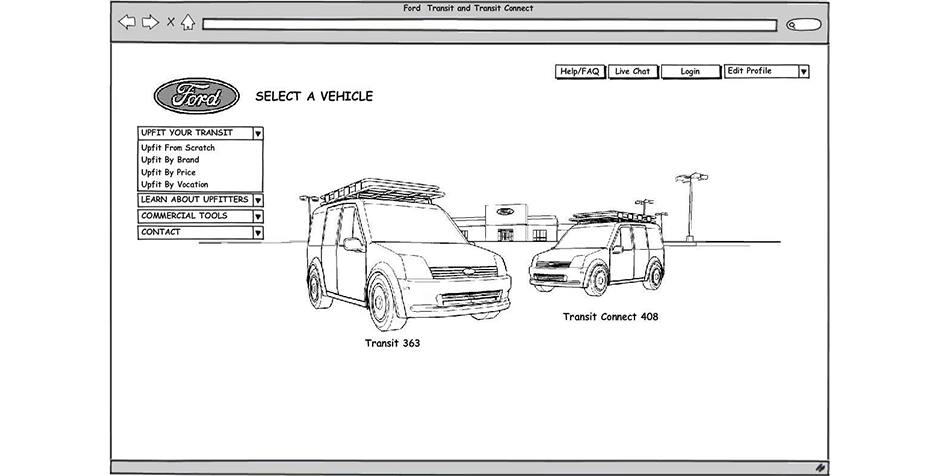
- Functional Prototyping & Testing – Iterating based on scenario features and refinement
- Scalable Design System – Supporting future growth and platform expansion with a focus on future OEM partners and market expansion
Defining the Problem:
Users need a modern, stable, and intuitive sales tool that:
- Enhances customer confidence and satisfaction
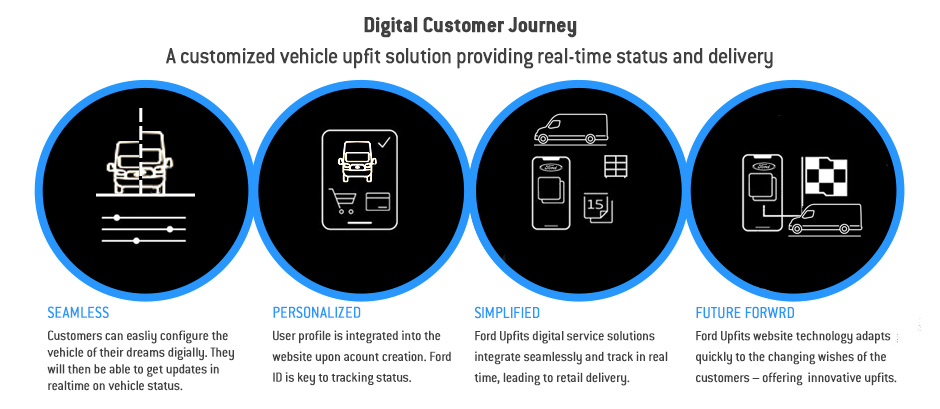
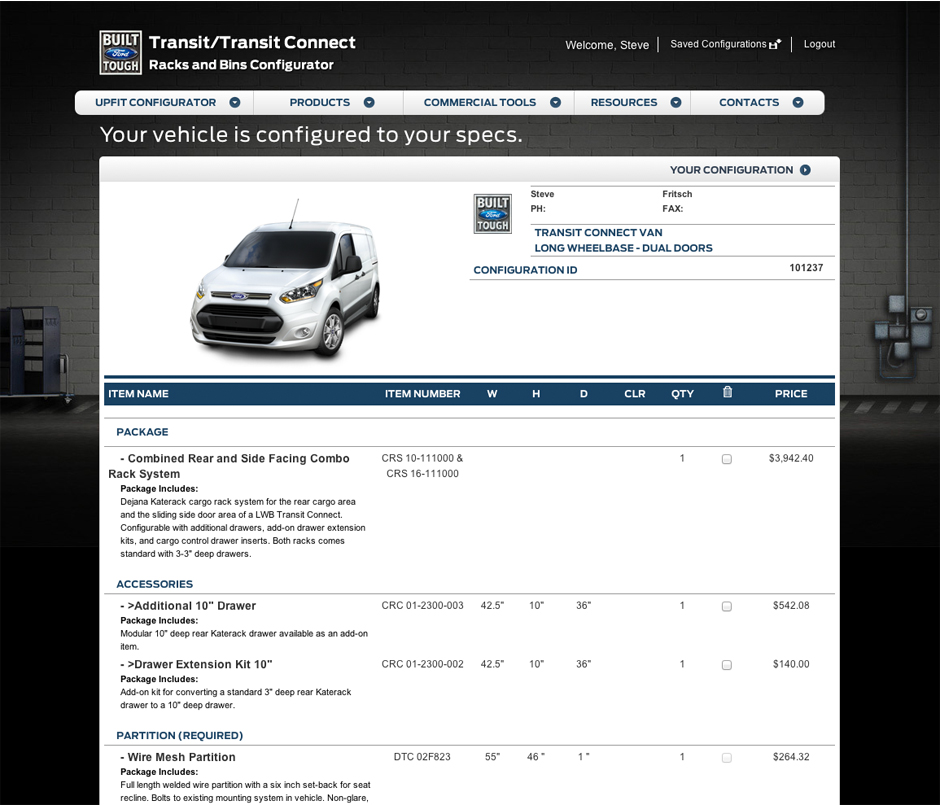
- Supports real-time ordering of custom vehicle configurations
- Saves time and improves sales efficiency
- Encourages return customers and long-term adoption
Success Metrics:
- A seamless, user-friendly sales tool launching on time
- Impactful adoption rates among dealer sales teams
- Minimal customer attrition post-launch
- Ability to grow OEM markets into the system and integrate seamlessly expanding market share and extending partnerships
- A scalable front-end framework adaptable to future enhancements
Product Roadmap & Phased Launch:
Phase 1: Launch MVP with three OEM upfitters, including a CMS backend integrating products, pricing, and fulfillment.
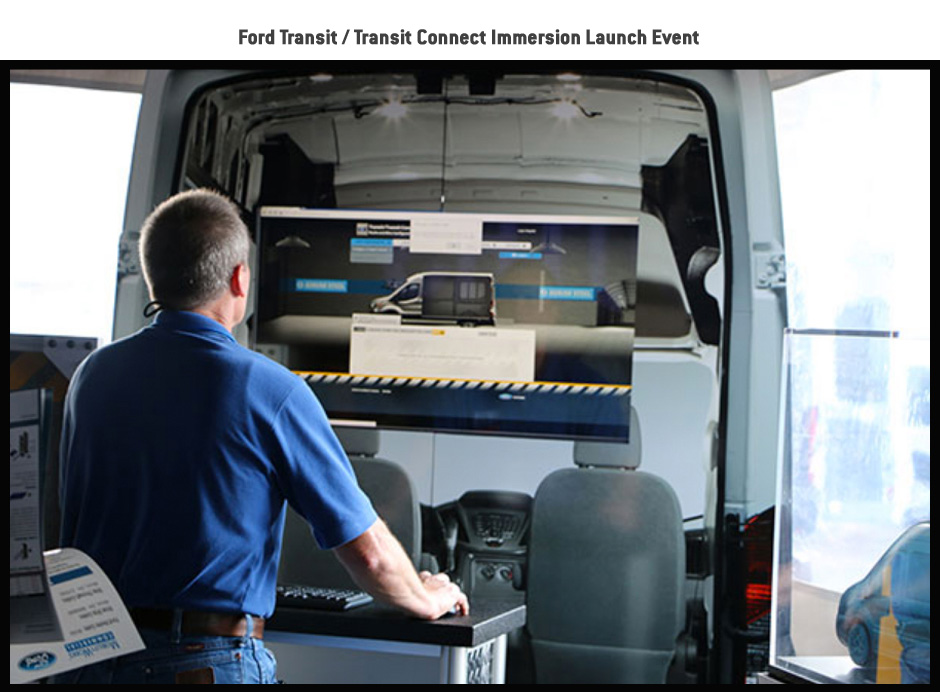
Phase 2: Implement real-time data tracking, manufacturing status updates, and product training.
Phase 3: Expand to include B2C segmentation, consumer-facing features, and enhanced analytics for continued optimization.
Design Considerations & UX Priorities:
The design should be upfitter agnostic but retain OEM identifiers (Branding, product identifiers to identify as an associated product, product features will be the focus over product compassions at launch. Products specific to each can be highlighted within.
Each upfitter has both a unique and shared product line, out in the market they may compete with one another, in this space, they need to share equal importance on the primary digital tool level. Products specific to each can be highlighted within. Internal goal to consider past proposed solutions as an opportunity to integrate heavy truck, commercial and government business sectors into future product evolution. Iterative planned product evolution.
- A seamless, user-friendly sales tool launching on time
- Impactful adoption rates among dealer sales teams
- Minimal customer attrition post-launch
- Ability to grow OEM markets into the system and integrate seamlessly expanding market share and extending partnerships
- A scalable front-end framework adaptable to future enhancements

What does success look like?
A product sales tool aligning with Ford brand design and a front-end framework that allows for future expansion. Impactful adoption and minimal customer attrition launching on schedule with powerful features and room to evolve over the course of time.
Phase 1: Product MVP with Three OEM Upfitters including a CMS backend tied into products, pricing and fulfillment.
Phase 2: Back-end Analytical Real-time data tracking, manufacturing tracking, real-time vehicle status. Product training launch and product roll-out.
Phase 3: Analytics implementation, B2C segmentation, product analysis and consumer facing implementation.